Understanding Your Home’s Energy Future: A Guide to Distributed Energy Resources (DERs)
Introduction: The Changing Power Grid - From a One-Way Street to a Two-Way Highway
For over a century, our electricity system worked like a one-way street. Massive power plants usually burning coal or gas created electricity and sent it over long-distance wires to our homes. We simply turned on the lights and paid the bill. We were passive consumers.
Today, this old system is hitting its limits. Aging wires, rising energy costs, extreme weather, and the need for cleaner air are forcing a massive upgrade. Transporting energy across long distances also naturally causes power losses, wasting electricity simply to move it from a centralized plant to your neighborhood(Chowdhury & Tseng,2007). We are now moving away from this top-down system to a localized, two-way highway. Instead of relying solely on giant power plants miles away, we are generating and storing power right in our own neighborhoods and homes. This shift is turning everyday energy consumers into active "prosumers" - people who both produce and consume their own clean power (LópezGonzález & GarciaRendon,
The technology making this possible is called Distributed Energy Resources (DERs).
What Are Distributed Energy Resources (DERs)?
Simply put, a Distributed Energy Resource (DER) is a small-scale technology used to create, store, or manage electricity right where it is being used like your home or a local community center (Hargrovesetal.,2023).
Unlike massive traditional power plants, DERs are modular and adaptable. They can be installed on your roof, in your garage, or down the street.
How DERs Scale: From Your Home to Your City
To understand how these systems fit into our world, here is a simple breakdown of their sizes:
Size Category | What It Looks Like | Where It Lives |
Micro (Your Home) | Smart thermostats, smart water heaters. | Inside your home. |
Mini (Your Property) | Rooftop solar panels, home battery backups (like a Tesla Powerwall), EV chargers. | On your roof or in your garage. |
Small (Your Neighborhood) | Commercial solar on local grocery stores, community solar gardens. | Local businesses and open neighborhood spaces. |
Medium / Large (Your City) | Localized wind turbines, hospital backup generators, large battery storage facilities. | Connected to the local city power lines. |
The Core Technologies: Generate, Store, and Manage The world of DERs is made up of different tools working together. They generally fall into three buckets: I. Generating Power (Making Electricity)
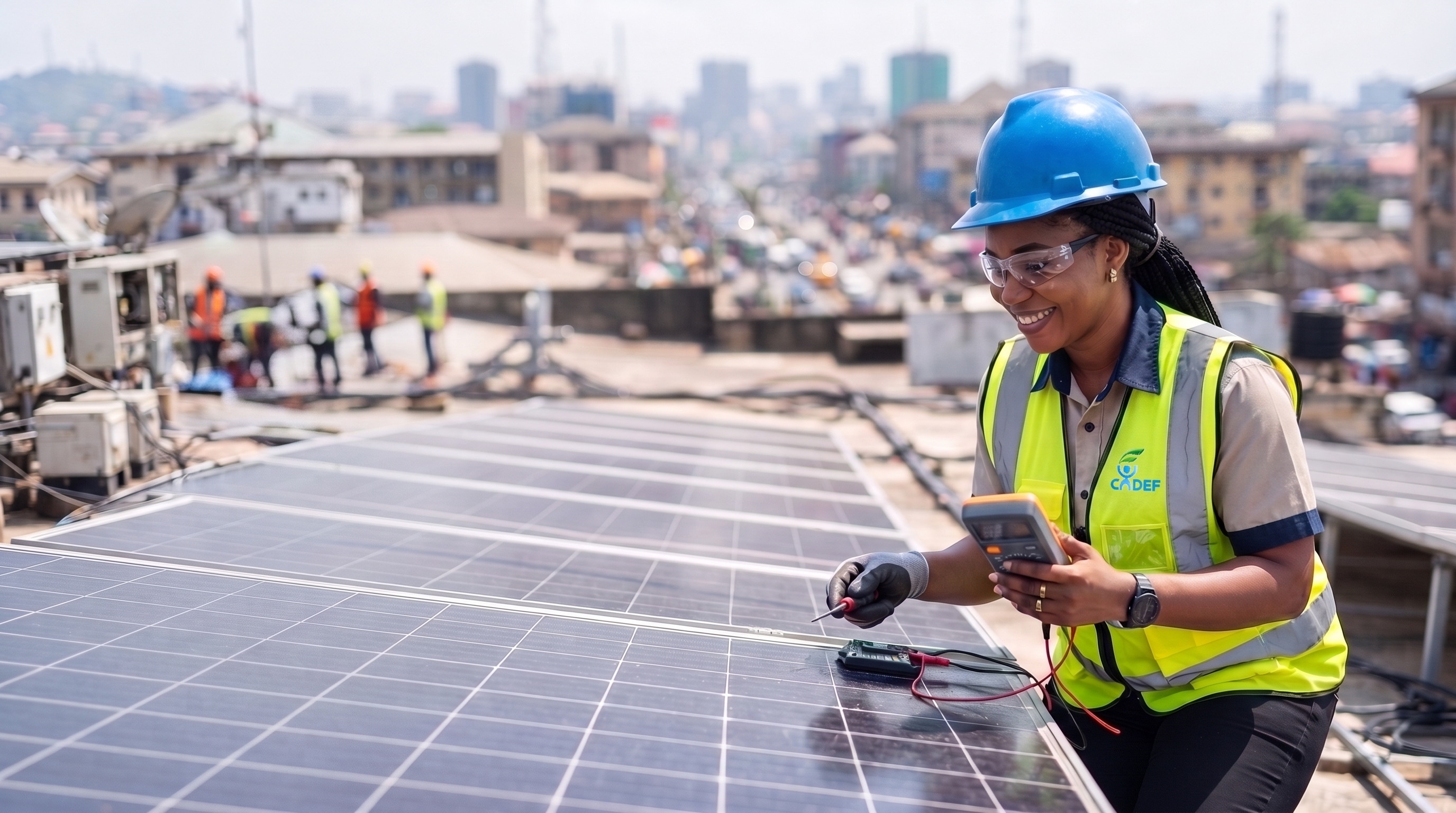
Solar Panels: The most popular DER. They capture sunlight and turn it into electricity for your home, reducing your reliance on the grid during the day.
Small Wind Turbines: Smaller versions of massive wind farms, used to power local communities or businesses.
II. Storing Power (Saving Electricity for Later)
Home Batteries: These store the extra power your solar panels make during the day. You can use this stored power at night or during a blackout.
Electric Vehicles (EVs): Think of an EV as a giant battery on wheels. With the right charger, you can actually plug your car into your house and use it to power your home during an emergency.
III. Managing Power (Using Electricity Smarter)
Smart Inverters: If solar panels are the heart of a home energy system, the smart inverter is the brain. It takes the raw power from the sun and safely formats it so your home appliances can use it.
Thermal Storage: Devices like smart water heaters can heat water when electricity is cheap and abundant, keeping it hot for when you need it later.
3. Teamwork: Microgrids and Virtual Power Plants
A single solar panel on one house is great. But the real magic happens when hundreds of homes connect their technologies together.
Microgrids (Your Neighborhood Backup)
A microgrid is a miniature power grid for a specific area, like a hospital, a university, or a neighborhood. If a massive storm knocks out the main city grid, a microgrid can disconnect itself and use its own local solar panels and batteries to keep the lights on for its community, significantly boosting disaster resilience (Mishraetal.,2020).
Virtual Power Plants (The Digital Team)
A Virtual Power Plant (VPP) doesn't exist in one physical building. Instead, it is a smart software system. It securely connects hundreds of home batteries, solar panels, and smart thermostats across a city. If the main grid is struggling on a hot summer day, the VPP can ask all those home batteries to share a little bit of power at the exact same time, preventing a city-wide blackout.
4. Why This Matters to You: The Benefits of DERs
Upgrading to a decentralized energy system provides massive benefits for everyday homeowners and communities.
Financial Savings: By making your own power and storing it, you buy less electricity from the utility company. Some programs even pay you for sending your extra power back to the grid.
Better Reliability: With local batteries and microgrids, a fallen tree miles away no longer means your food spoils in the dark. Your home becomes a protective fortress during extreme weather (Mishraetal.,2020).
A Cleaner Environment: Generating power at home with solar and wind drastically reduces carbon emissions and removes the need for highly polluting "peaker" power plants.
5. Overcoming the Growing Pains
Changing a 100-year-old system is not without its challenges. Because our grid was built for power to flow in only one direction, having thousands of homes suddenly sending solar power back into the wires can cause traffic jams on the energy grid. Furthermore, the sun stops shining and the wind stops blowing, meaning the power supply can fluctuate.
The Solution: Utilities are installing "Smart Grid Brains" (technically called Distributed Energy Resource Management Systems). These advanced computer systems act as traffic cops, monitoring weather and power flows to ensure grid stability and easily integrate localized renewable energy (Foseetal.,2024).
Conclusion: A Smarter, Cleaner Future
The shift to Distributed Energy Resources is not a passing trend; it is the inevitable future of how we power our lives. Driven by falling costs for solar panels and batteries, the energy grid is transforming into a digital, intelligent network.
By bringing power generation into our own neighborhoods, we are building an energy landscape that is cleaner, cheaper, and more reliable for everyone.
References
Chowdhury, B. H., & Tseng, C. L. (2007). Distributed Energy Resources: Issues and Challenges. Journal of Energy Engineering, 133(3), 109–110.
https://doi.org/10.1061/(asce)0733-9402(2007)133:3(109
Cited by: 16
Fose, N., Singh, A. R., Krishnamurthy, S., Ratshitanga, M., & Moodley, P. (2024). Empowering distribution system operators: A review of distributed energy resource forecasting techniques. Heliyon,
10(e34800).https://doi.org/10.1016/j.heliyon.2024.e34800
Cited by: 57
Hargroves, K., James, B., Lane, J., & Newman, P. (2023). The Role of Distributed Energy Resources and Associated Business Models in the Decentralised Energy Transition: A Review. Energies, 16(10), 4231.
https://doi.org/10.3390/en16104231
Cited by: 53
López González, D. M., & Garcia Rendon, J. (2022). Opportunities and challenges of mainstreaming distributed energy resources towards the transition to more efficient and resilient energy markets. Renewable and Sustainable Energy Reviews, 157(112018).https://doi.org/10.1016/j.rser.2021.112018
Cited by: 30
Mishra, S., Anderson, K., Miller, B., Boyer, K., & Warren, A. (2020). Microgrid resilience: A holistic approach for assessing threats, identifying vulnerabilities, and designing corresponding mitigation strategies. Applied Energy, 264(114726).
https://doi.org/10.1016/j.apenergy.2020.114726
Cited by: 320